On Discipline and Consequences
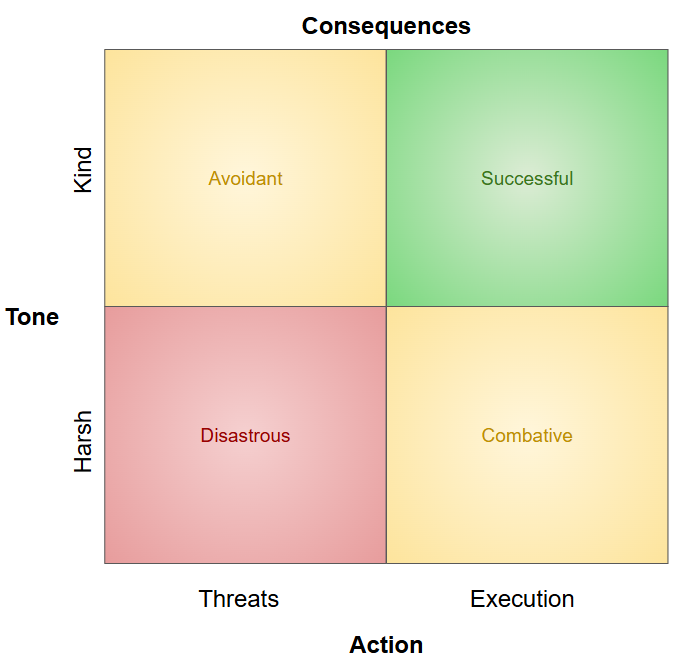
How do you discipline bad behavior in a child? Tough love? Gentle parenting? You want them to learn what’s not okay, but not at the cost of hurting your relationship or their self-esteem. It’s an important question that many parents struggle with. Like many life truths, the answer is simple but not easy: fair consequences, clearly explained, applied consistently and firmly with love.
Natural Consequences
That consequences should be fair (proportional to the misbehavior) and clearly explained (your child should know ahead of time the behavior is wrong and what was agreed would happen) does not need much explanation.
Most mistakes have “natural consequences” that follow logically in a way kids understand and can accept: if we break something we fix it; if we hurt someone we apologize and check if they’re okay; if we forget to do homework we have to do it in our fun time instead. These consequences are restorative rather than punitive–they remove guilt and repair relationships.
Adults are responsible for teaching children these consequences and enforcing their follow through. It’s a lesson that can be taught with love, without anger, and from the perspective of being on your child’s side, not against them.
So why is this so hard?
Weather the Storm
It’s hard because kids won’t respond well–at first. No screen time because I didn’t do my homework? Few kids are going to meekly accept that. A lost privilege, compounded by the guilt and anxiety of having done something wrong, hurts.
And when things hurt, most people respond defensively. They can be aggressive, they can be sullen, they can stonewall. Whatever it takes to block out the hurt. Not many adults are able to let go of this and accept their hurt–almost no children can. So there will be a tantrum.
This is where things go wrong. Because seeing our kids in pain, and mad at us, hurts us too. And then we have go through the same feelings. Perhaps we become defensive and respond aggressively: our tone becomes harsher, the consequence we’re imposing escalates. We seek to avoid our hurt by overpowering our child into submission, so they learn to stop complaining and won’t hurt us again in the future. Not only does this wound our relationship, it doesn’t actually work–kids will learn to go behind your back.
Alternatively, some parents submit to their kids. They can’t bear the hurt of the tantrum so they seek to avoid it from their side: future ‘consequences’ are only threats that are never followed through, for fear of triggering another painful argument. Kids learn they can get out of anything by becoming emotional, that their parents will back down. Worse, they lose access to a trusted adult to set up guardrails of what’s right and wrong. They instead look to peers or online sources for that guidance, with potentially dangerous consequences.
The key is to “weather the storm”: your kids will respond emotionally and negatively to consequences, and you may feel a spike of negative emotion too. That’s normal. Our job as adults is to fight to stay composed, even when our children can’t. It’s okay for them to be mad, it’s not a sign that you’ve done something wrong as a parent (despite what they may say).
You can let them have the tantrum. You can empathize with their feelings: it does hurt to lose privileges, that’s why it’s important to be thoughtful in our choices. You can be warm and kind in tone. But that doesn’t change the consequence–when they’ve had a chance to be emotional and the storm has passed, they still have to make amends and fix the problem.
Benefits for Life
This is a tremendously powerful lesson. Your kids have learned their behavior matters and there are real consequences. They’ve learned that it’s okay to have emotions, and that doesn’t remove the need for action. And they’ve learned that you love and support them even when they’ve messed up.
And more good news: it gets easier. The storms become rarer and smaller. (But there will still be some!) Kids learn that mistakes happen and there’s no need for fear or shame, we just need to act to fix them. And without fear or shame, there’s no more hurt, no more tantrums. We build adults that can acknowledge their wrongdoing without negativity and fix it proactively, for the good of themselves and others. What a world we would have if more kids grew up this way.
Sebastian
1/22/26